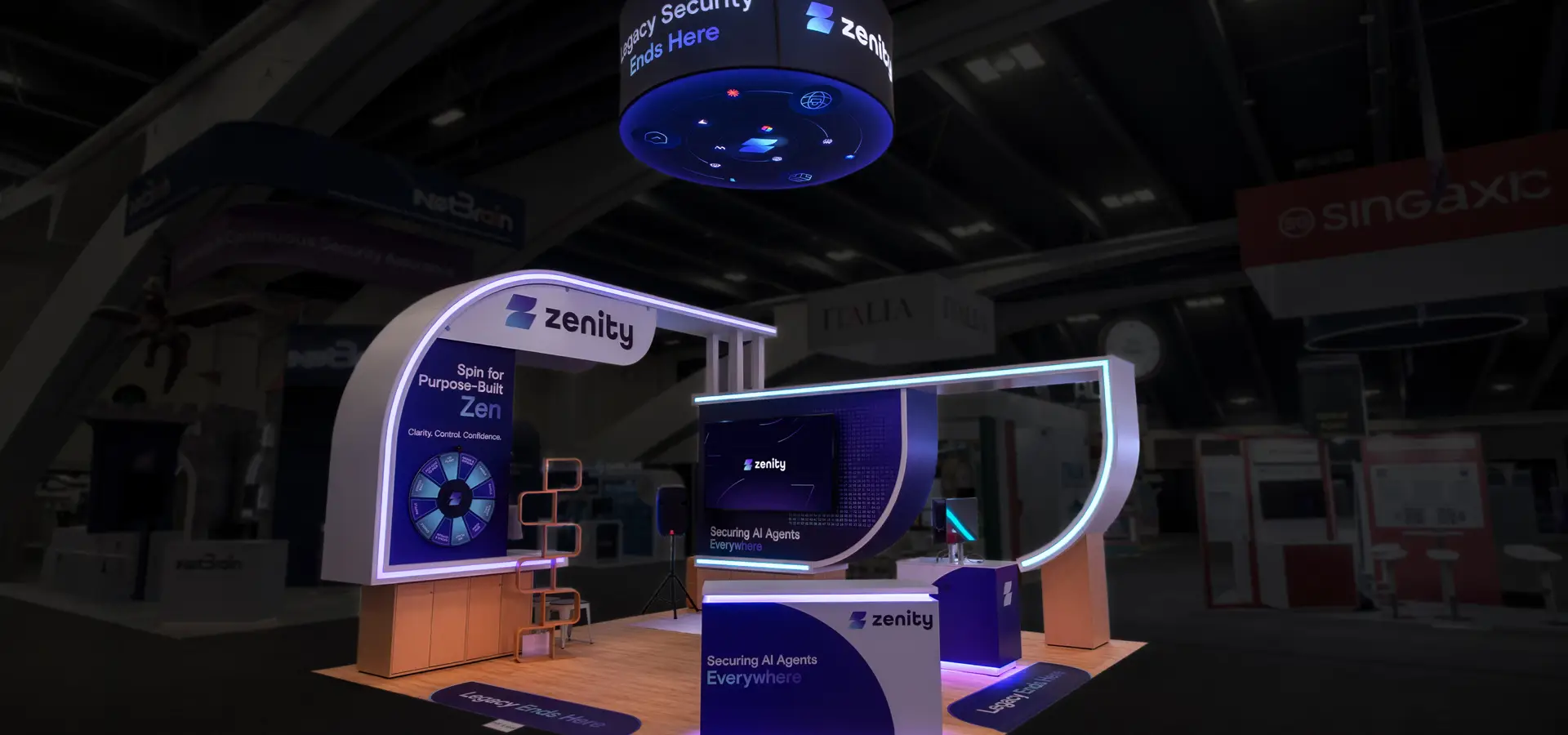
If you’re exhibiting at a major trade show in your industry and need help planning and creating your booth, you’re in the right place.
As a seasoned exhibit fabricator and strategic trade show partner, we know the steps required to get from A to Z and smash your goals.
Here’s a chronological breakdown of what you need to do and when.
8 months before the show
This is the point at which most exhibitors will typically do one of four things:
- Contact several vendors directly to obtain quotes and a breakdown of the service provided (based on a Google search or word of mouth referral).
- Contact a vendor they’ve worked with in the past to request a quote and get a rough idea of timeframes.
- Invite a handful of preferred vendors to bid, sometimes with a simple written brief.
- Issue a formal RFP, or Request for Proposal, inviting vendors to bid on providing services such as booth design and fabrication and other trade show-related services. This is especially common for large booths, multi-show programs, or high-value contracts.
If you invite vendors to bid via an RFP, it should be clear and detailed, avoiding any doubt as to your expectations.
It should include information such as:
- An overview of the event (name, date, venue location, format, attendance size, audience demographics)
- Any venue rules or constraints you are aware of
- The scope of services required
- Technical and creative requirements
- Your strategic goals and business objectives
- Your desired booth dimensions and layout
- Brand guidelines
- Budget expectations
- Submission requirements (expected response format and deadlines for design drafts)
Then there’s the review process, at which point you’ll narrow it down to a handful of vendors. There’s no right or wrong number here, but having three or four names in the final shortlist is fairly typical from our experience.
Once you’ve chosen your exhibit fabricator, that’s when the creative fun starts.
6 months before the show
This is the absolute latest timeframe in which you should reach out to your exhibit house if you go down the route of contacting them directly.
You should have your ideas ready for them and have meetings booked in so you can explore your wishlist and assess what’s practical and achievable.
By working to this timeframe, your exhibit house will be in a great position three months out from your event. They’ll know exactly what they're trying to execute, they’ll have a design, and they’ll have a clear plan, and then it's just a matter of executing that plan.
Before you do anything else, we strongly advise that you create an internal team. Your company’s decisions should not all go through just one person — you ideally want to have a committee of people involved at each stage of the project, with clear buy-in from leadership.
Around five to six months before the show, you and your trade show partner should be finalizing and building booth designs. The type of booth you opt for depends on numerous factors, including the amount of floor space you require and what you want to accomplish at the show. Custom booths will take longer than any other type of booth, for obvious reasons.
You should also have locked down core messaging and completed primary logistics like electrical or AV service orders. By doing this ahead of time, you’ll avoid incurring unnecessary rush fees.
Other general tips
Here are some other general tips for this stage of your project:
- Visit your vendor and view the different sections of your exhibit if you’re able to. This will allow you to see and feel what you’re paying for and view progress. You might be spending anywhere between $200,000 and $1 million on this exhibit, so it’s important to know what you’re paying for and get up close and personal. When we created an exhibit for Hardware Resources, they came to our facility and viewed the different sections of this exhibit, such as the closet space that we built out for them, the cabinetry displays, the lighting displays, and so on.
- If you attended the same show the previous year, and you have photographs of your booth, create three categories. 1) What you liked about the booth, 2) What you didn’t like or didn’t work (functionality issues etc), 3) A wishlist, i.e., what you’d love for the next booth to have.
- Look at the data from last year’s show (number of cards scanned, opportunities created, deals closed, etc.) If it wasn’t successful, you may wish to consider a smaller booth space this year. Every design element and decision has to be viewed through the lens of “How will this attract the right people to our booth?”
1-3 months before the show
At this stage, you need to decide who’s staffing your trade show booth. Will it be your sales reps? Your developers? C-suite? A combination of all three?
Determining this in advance means you can prepare the relevant people for what to expect (particularly if they’ve not been at a trade show before) and ensure you deliver a consistent message to your ideal buyers.
You have to train everybody up on what to expect. If it’s a large booth, you should have a scheduling system in place so people know when they should be in the booth and when to take a break.
This next tip should be pretty self-explanatory, but etiquette is so important at trade shows, and you should remind your booth staffers of this. They shouldn’t be talking to each other in the booth or looking distracted or disinterested as attendees and would-be buyers are passing by. You only have a matter of seconds to make a good first impression, and not following proper etiquette instantly rules you out.
You should also make sure everyone is up to speed with the lead capture process, i.e., making sure badges are being scanned, leaving detailed notes on the system, and ensuring these notes are synced to your CRM (Customer Relationship Management) system.
How your brand appears at the show is another key consideration at this stage. Some brands have coordinated dress codes whereby everyone is wearing the same polo shirt, jumper, t-shirts, and shoes. However, you may want a less uniform look and feel and something a bit more casual. Deciding this months in advance avoids any confusion or fashion faux pas further down the line.
And then there’s making sure everything is ok with the install. This is perhaps the biggest potential hiccup, which is why forward planning is so essential.

Robert Lassiter is our install and dismantle manager, overseeing the installation of dismantling of exhibits on show sites as a traveling supervisor. Robert manages a crew both in and out of The Trade Group and his responsibilities include working alongside labor companies to build our clients’ exhibits.
“In some of the stricter cities, such as New York, Chicago, Philadelphia, and San Francisco, we are supervisors only. We have our crew that actually is in the union that does all of the work.
“When you're in these cities, labor rates are higher, and these cities are generally more expensive. Your labor bill could easily amount to $10,000 - 50,000. Thankfully, we will have an on-site trade show professional who can coordinate with labor union workers to save on your install costs.
“You should also factor in the weight of your exhibit. Exhibitors are charged based on how many pounds per cubic foot (lb/ft³) their crates weigh. The more weight you ship in, the more you’ll be charged.
“You could reduce the amount of weight in your crates by using lightweight items in your booth. We can advise on which specific items will save you money. You could opt for fabric graphics, which are lighter than an old-style panel graphic, which can weigh a lot. This is just one of the ways to save on your drayage.”
The weeks leading up to the show
By this point, you’ve put in most of the groundwork needed to make maximum impact on the show floor. It’s simply a case of crossing the T’s and dotting the I’s.
You must have a coordinated social media campaign plan to promote your presence at the show, with multiple posts going out each week across different platforms. You can also build hype via:
- Dedicated email sequences to warm leads on your database.
- Bespoke landing pages promoting your presence at the show.
- Paid ads.
- Press releases.
And don’t just put the word out there and wait for people to find out. Reach out directly to your leads, too.
A simple phone call, LinkedIn direct message, or personalized email will keep you front of mind and put your name firmly in the diary of your ideal customers.
For more tips, check out our blog Common Trade Show Mistakes And How To Avoid Them.
Plan your next trade show with The Trade Group today
As a strategic trade show partner, we’re here to make your trade show planning as slick as possible.
Since 1986, we’ve brought business’ stories to life with cutting-edge trade show booths that function as storytelling assets.
From engineering, design, and fabrication to installation and dismantle (I&D), shipping, and storage, we’ve got you covered.
If you’re interested in partnering with us for your next event, send us a note here or give us a call at 800-343-2005.