
So you’re launching a game-changing product or service that you’re super excited about.
You now need to determine how you’ll position, promote, and deliver this solution to your ideal customers.
This is where a GTM, or go-to-market strategy, comes into play.
A GTM strategy is an action plan for how you’ll bring a product to market, who the product is for, and how you’ll reach potential buyers. It outlines customer, pricing, sales model, distribution channels, and positioning.
If you haven’t already considered trade shows as one of your distribution channels, you need to. Otherwise, you could miss a golden opportunity to get in front of qualified decision-makers and generate significant return on your endeavors.
Here are five reasons why trade shows are integral to your GTM strategy.
1. You get exclusive facetime with your target audience
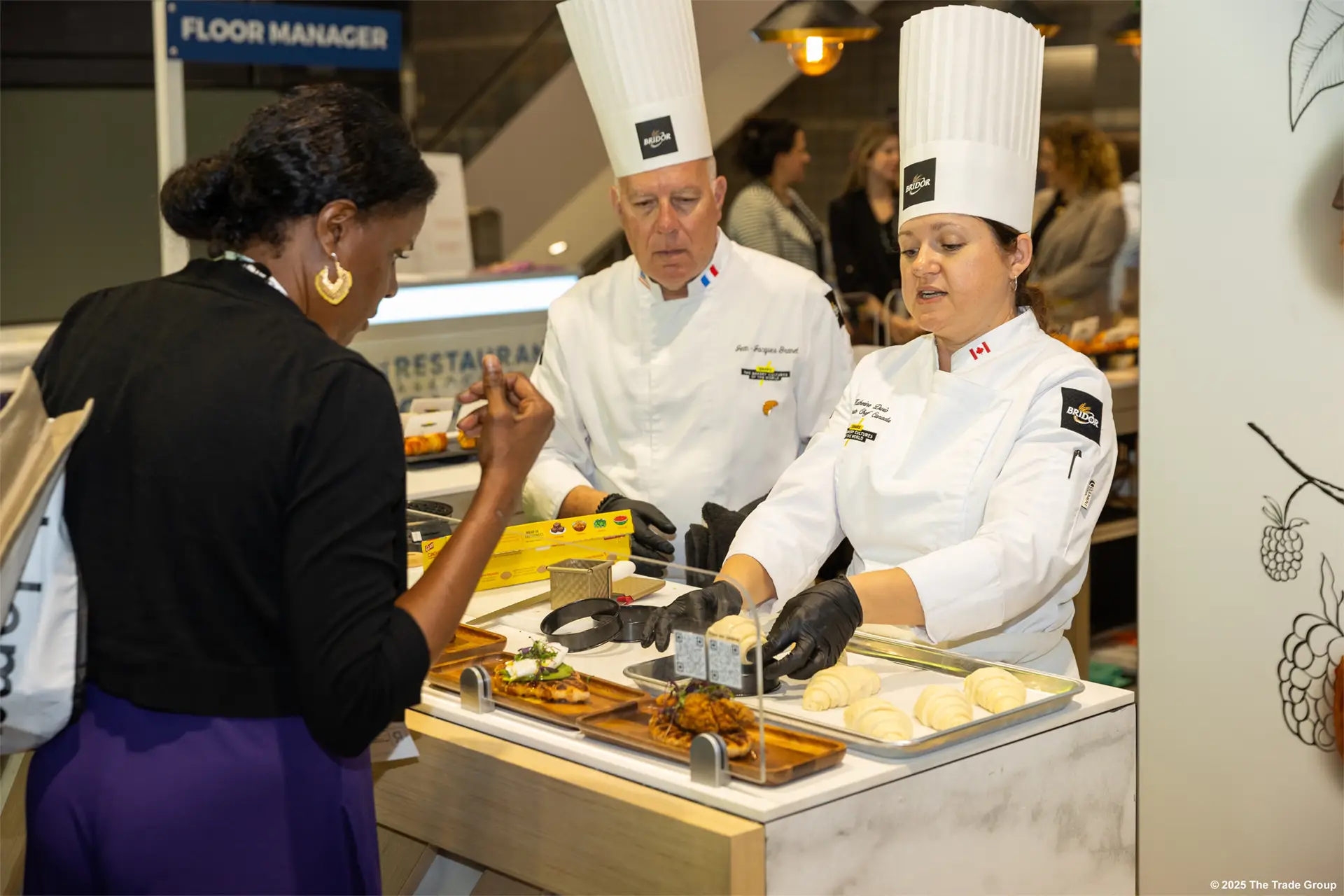
We cannot stress enough the value of engaging with your target audience face-to-face on a personal level.
Meeting with warm leads and key accounts at a trade show allows you to garner their trust while allowing them to fully understand your solution’s benefits and opportunities.
They can delve deeper into how your solution works in real life compared to if they briefly read about it in an email, social media post, or press release—and this can only speed up the decision-making process.
Almost three-quarters (72%) of trade show attendees are more likely to buy from exhibitors they meet at trade shows versus a company they did not meet.
It’s just human nature. We’re far more likely to recall something we saw or spoke about in person, and meaningful dialogue is key to staying front of mind when your prospects are ready to buy.

Mike Nielson is Events Lead at AMN Healthcare and is also a CTSM (Certified Trade Show Marketer). Here are his tips for trade show exhibitors:
“Trade shows provide a unique face-to-face engagement opportunity, and offer one of the best ways to connect with a captive audience.
Instead of leaving voicemail after voicemail and trouncing all across the country, you can get in front of people much easier and have very impactful conversations.
These conversations have helped us build trust quickly and have led to a much deeper discussion about the strategic priorities for our clients and prospects, while also shortening the sales cycle in most cases.”
2. You’re in front of decision-makers, not intermediaries
You can have the most positive, productive conversation with an interested party over phone or email, but if they have to go through their manager’s manager’s manager for approval, it could be a while before you receive any meaningful update.
The trade show floor is a different beast.
You’re not having to wait for feedback or waste hours of your day trying to schedule calls or meetings.
Instead, you’re face-to-face with people who have the authority to sign off on a potentially lucrative deal, and you can gauge their level of interest there and then.
More than four out of five people (81%) who attend trade shows have buying authority, which we think you’ll agree are pretty good odds.
In addition, 92% of attendees come to discover new products or services, with 46% in the final stages of their buying decision.
Even if you haven’t yet launched your product or service, you’re speaking to the right kind of people when you attend trade shows. These people aren’t timewasters; they’re prepared to evaluate offerings like yours seriously.
Mike Nielson:
“I’ve noticed an increase in the caliber of attendees at trade shows post-COVID.
We’re now seeing the higher level people coming to the trade shows—the demographics from five years ago compared to now are night and day, which is hugely encouraging for exhibitors moving forward.”
3. You can explore customer friction points and objections
Of course, the feedback on your product or service may not be altogether positive, and that’s ok.
You want to gather as much intel as you can so that you can make the necessary refinements to your messaging before launching your solution to market.
By gathering intel, we mean:
- Establishing any potential gaps, drawbacks, or friction points a customer may have.
- Addressing any objections they express and noting their body language when you explore certain features.
- Asking them deep-rooted, open-ended questions to get to the bottom of how your product or service will overcome such objections.
It may be that price is a sticking point, or that there are similar solutions on the market and the attendee you’re speaking to isn’t clear enough on differentiators.
You have the luxury of being able to find all of this out before you make costly marketing mistakes further down the road.
Mike Nielson:
“The biggest advantage of being at a trade show is you get to hear objections in real time, and engage not only with long-term existing customers but with prospects who may pose certain interesting questions or objections.
They could be around anything from pricing to implementation problems, and we can address these concerns on the spot while gathering additional information which allows us to correctly position our products.
It may not always be the most pleasant thing to hear, but we know we need to hear it—and you can't do this through other channels. That’s why trade shows are invaluable for refining our marketing messaging, and ensuring that we're going to market focused on the right pain points.”
4. You can explore new markets
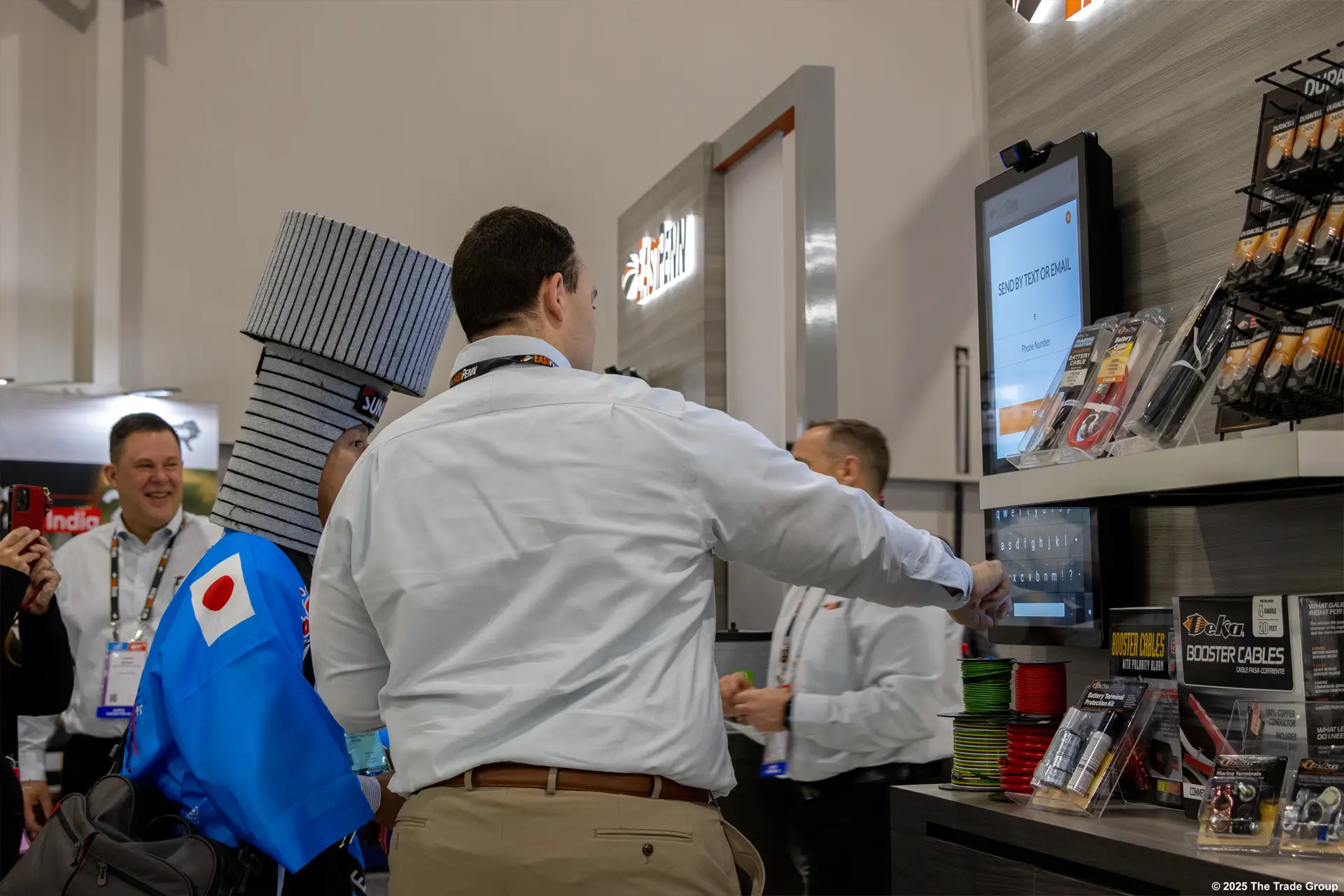
Trade shows enable you to fine-tune the customer element of your GTM strategy on a couple of levels.
You can find out more about their pain points, purchasing triggers, and potential objections, as outlined above.
But you can also use trade shows to test new markets. There may be another audience segment that you hadn’t considered before walking onto the trade show floor but that has a burning need for your solution.
The more conversations you have on the show floor, the more new potential markets may emerge, and the more nuggets of information you’ll uncover. And you may be very surprised by what you learn.
Take Rolls-Royce as an example.
The company has sold its luxury vehicles at airshows.
Airshow attendees may not immediately seem to be the most obvious target audience for Rolls-Royce, but the logic is pretty simple when you think about it.
Someone who attends this type of show and can afford a private jet will see a Rolls-Royce as a drop in the ocean.
But Rolls-Royce didn’t always have this intel from the start; they gathered it over time by putting themselves out there and thinking outside the box.
If you adopt the same approach, you could open more doors for your solution than you ever imagined.
Mike Nielson:
“We invest in regional shows because they allow us to engage directly with local audiences, spotlight our evolving specialties in a more intimate setting, and refine our messaging based on regional insights. The trade show environment has also helped us expand into new service lines and broaden our reach in high‑opportunity markets.”
5. You can benefit from greater social amplification
Research from UFI (the global exhibition association) estimates that 32,000 exhibitions were held worldwide in 2024, and that these exhibitions welcomed around 318 million visitors. This equates to roughly 10,000 visitors per exhibition on average.
Picture approximately 10,000 people in a room right now.
If even one in ten of those people stops by your booth, and one in ten of the people who stop by share their experience with your product or service on social media, that’s 100 people endorsing you to their entire social network.
And given most people who attend trade shows are senior stakeholders with decision-making power, their endorsement could go a long way. Maybe another CEO they play golf with sees their social media post, has a need for your solution, and decides to get in touch.
Therein lies the power of the trade show. You seldom get this type of exposure or achieve the same ROI via other GTM strategy distribution channels.
Among Fortune 500 companies, 14% reported a 5:1 return on investment (ROI) from their trade show exhibitions, meaning they earned $5 for every $1 spent. This probably has something to do with the fact that 90% of consumers say UGC (User Generated Content) influences their buying decisions.
Again, it’s common sense. If you’re an everyday customer and you see a social post from another everyday, unpaid customer saying a brand’s product or service is great, you’re far more likely to buy it than if you read something from the brand itself saying it’s great.
That’s called social proof—and the trade show floor is often the birthplace of social proof.
Make an unforgettable impression at your next show with The Trade Group
We’ll help you showcase your new solution, capture its every nuance, attract your ideal leads on the trade show floor, and convert them into long-term, loyal customers.
To us, a trade show booth isn’t just an asset. It’s an immersive, on-brand, storytelling experience that must align with your commercial goals.
Discover how we’ve helped other businesses like yours make unforgettable impressions on the show floor and if you’re interested in partnering with us at your next show, contact us here or give us a call at (800) 343-2005.