Clear, consistent booth lighting is the difference between gaining maximum visibility on the trade show floor and turning away visitors.
But how can you achieve the former and avoid the latter?
To answer this question, we sat down with Mike Graziani, our Vice President of Design, whom we’ve featured in numerous articles, and Noel Mares, our Creative Director, who oversees the work of our design department.
Here’s what they had to say.

DO…
Have a clear purpose behind each lighting element
Mike: You shouldn’t simply incorporate certain elements because you can. You want to make sure that every element of your booth lighting has a purpose to it.
Ask yourself:
- Is this lighting logical?
- Does it make sense?
- Is it complementing or distracting people from your messaging?
Incorporate lighting elements tastefully
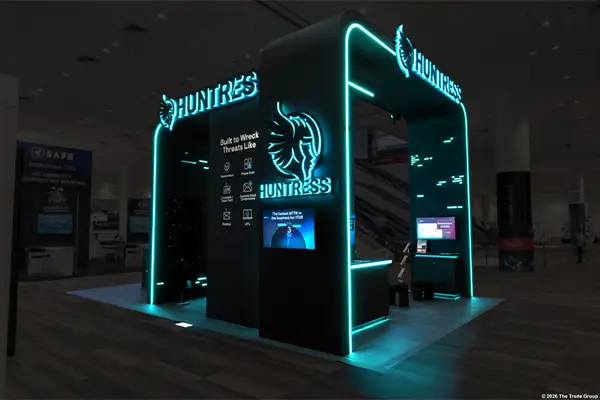
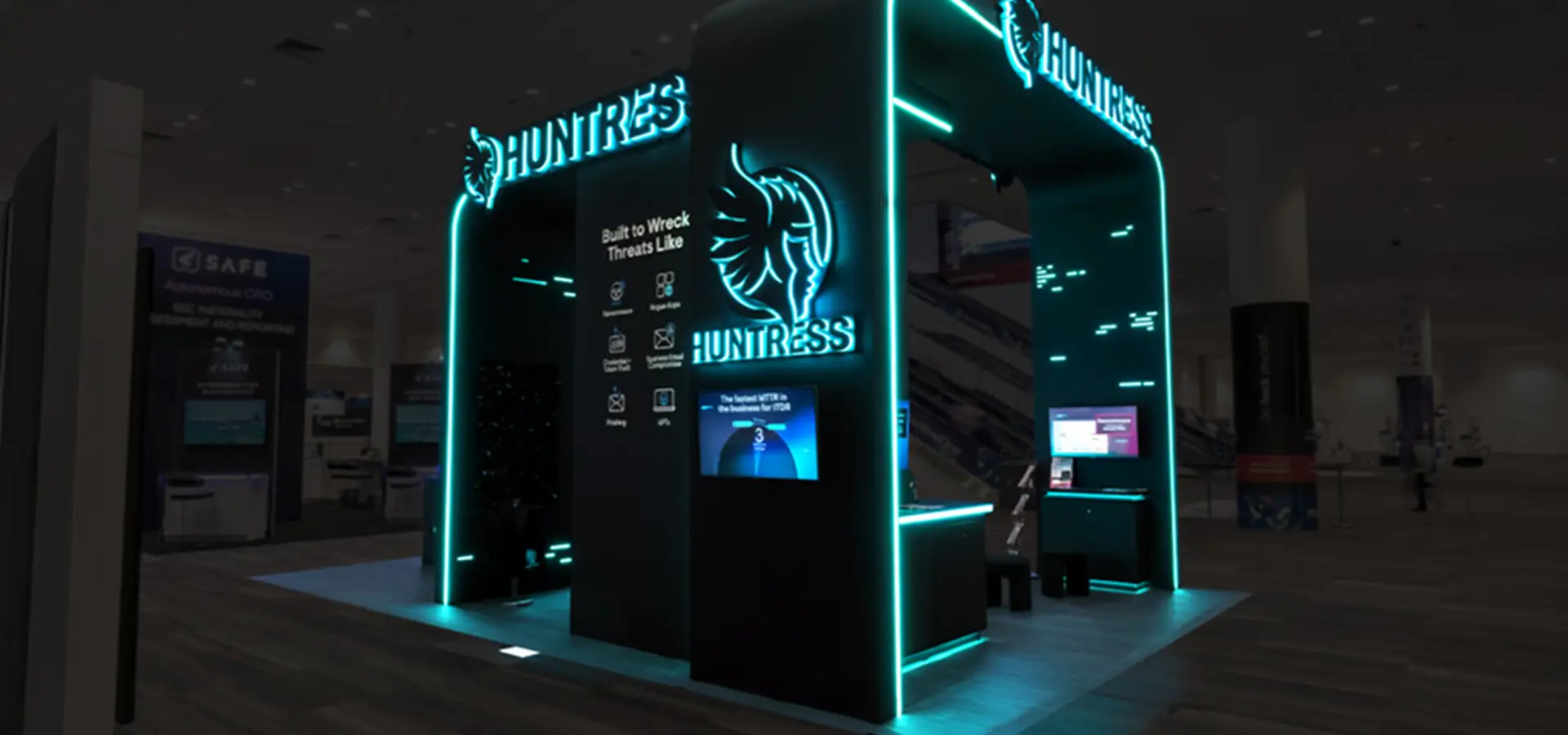
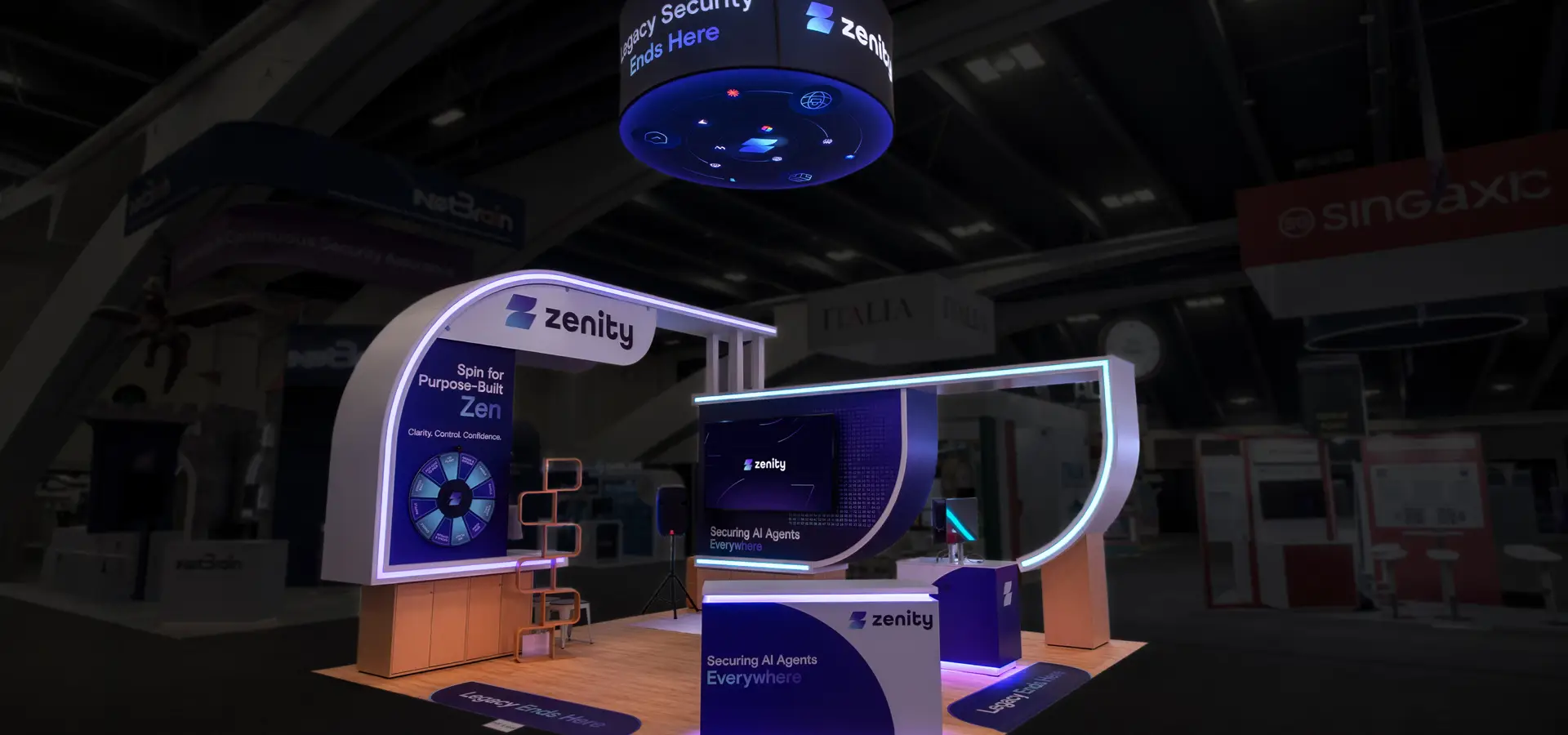
Mike: Lighting elements should be treated as accents within your booth.
To use a musical reference—if everything's loud, you don't notice the crescendo.
But if we create some nice, soft passages, suddenly that crescendo has some real impact.
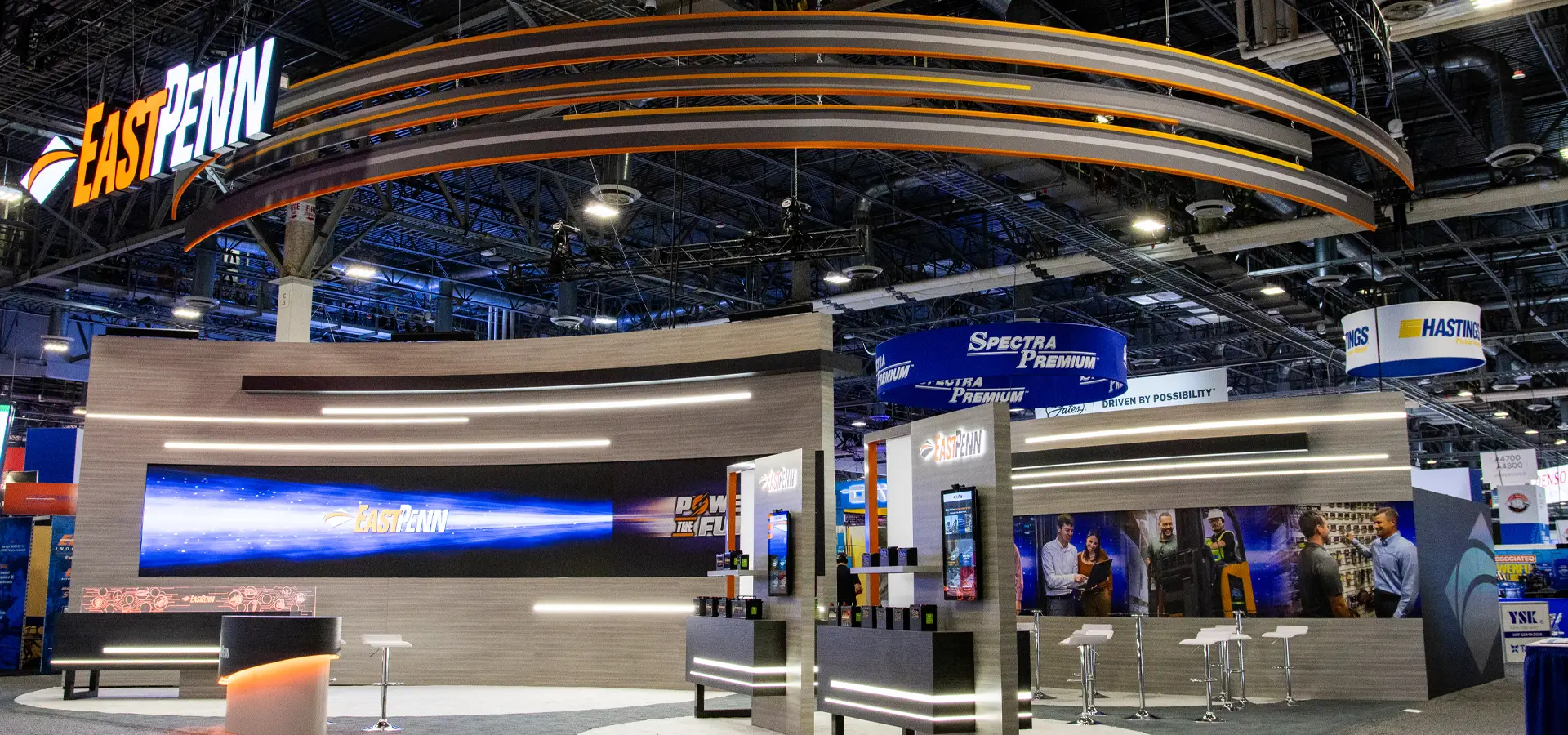
Noel: Not every surface needs to be lit, and you don’t need to have endless color changes within your booth.
It’s important to make your lighting look tasteful and, as Mike said, to have a clear purpose.
As long as it allows people to identify key points of interest from a distance as they approach your booth—for example, maybe you can logically group product families using color and motion—it’s done its job. Don’t overcomplicate things.
Make sure your lighting doesn’t interfere with booth functionality
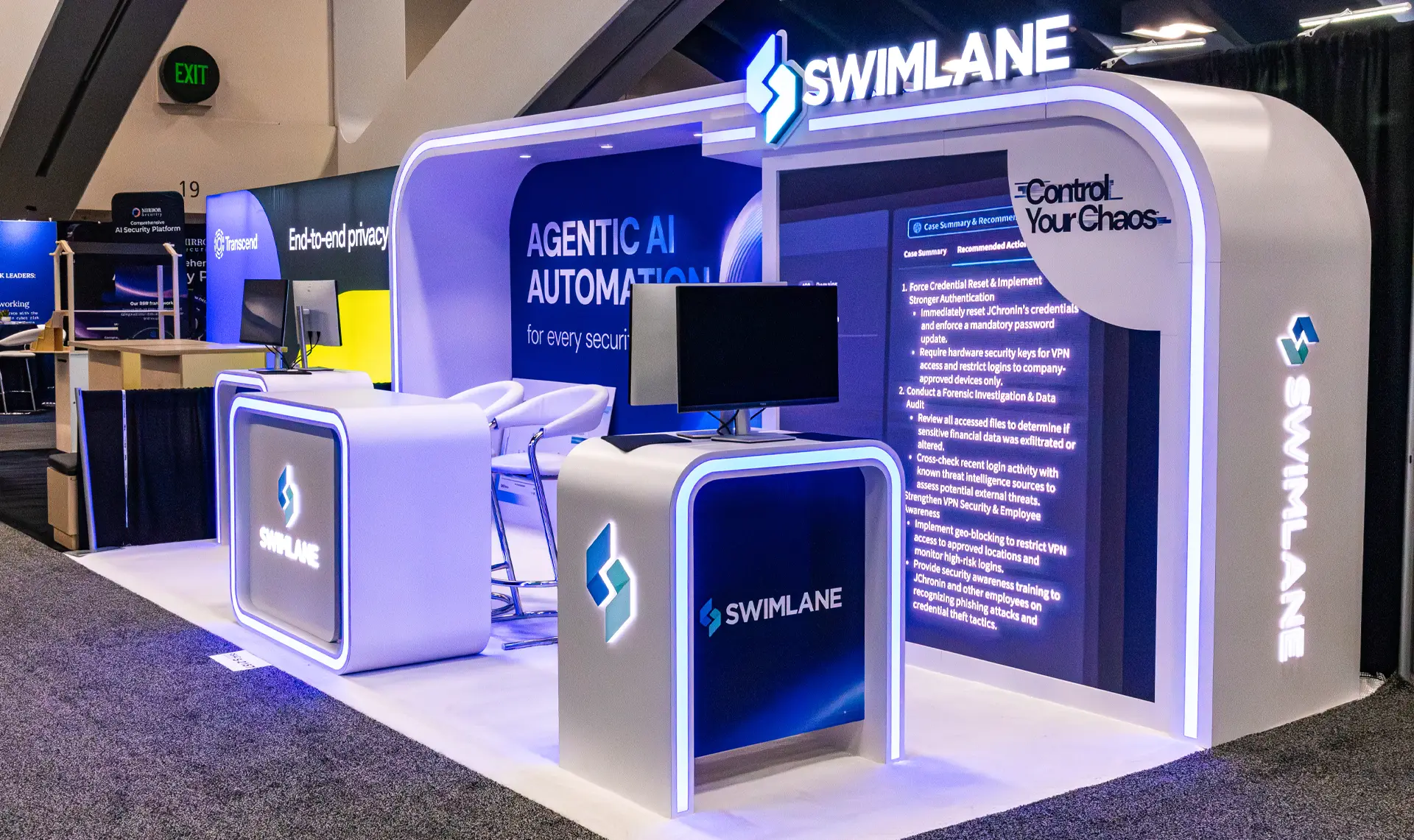
Mike: You don't want to have bright LEDs facing right into a workstation where people are trying to focus on a screen.
Instead, your lights should be oriented to face outward and attract attention from the directions that make the most sense.
Keep your audience on their toes
Mike: With the rise of LED technology, the lines are starting to blur between static illumination LEDs and moving pictures.
The amount of surface area that's ‘in-play’ with illumination is starting to grow, as the cost of this technology is coming down all the time, making it accessible to more exhibitors.
You can use this to catch attendees by surprise and increase dwell time in your booth.
Noel: You might see a wall that appears to just be a static wall, and it stays that way for a few moments, and then suddenly it springs to life with some kind of intense action before going back into hibernation momentarily.
This is far less predictable than your booth just being a continuous blast of light.
Ensure that color tones are harmonious
Mike: If you're using task lighting, and your booth has a black and red color scheme, you need to make sure that your task lighting is a warm light.
This way, it's harmonious with those red tones and it has a warmer color palette overall.
As another example—if your color scheme is reds and yellows, we would make sure that any white lighting was cheated towards the warm color temperatures to ensure harmony with the rest of the booth.
We see a lot of mishmash at trade shows as exhibitors, or their exhibit houses, haven’t taken color harmony into account. This has led to the creation of a booth with a mixture of cold and warm lighting and a somewhat disjointed look and feel.
Noel: Whatever type of lighting you go with, you need to be consistent in what you purchase.
Different manufacturers may have different temperatures, so if you're buying a set, make sure you get them from the same manufacturer.
Don’t buy some from Manufacturer A and some from Manufacturer B, as the different sets may not work together.
DON’T…
Go chasing a Vegas vibe
Mike: Sometimes, clients will come to us wanting LED lighting everywhere in their booth.
They’re looking for colored illumination, strip lighting, and something that looks like old-school Vegas. They want something cheesy and showy.
Whilst we can create this for them, we often remind them that less is more.
You don’t want to end up with a volume of lighting that’s too much like Vegas. This can work for some exhibitors but horribly backfire for others.
It’s most likely not going to work in attracting your ideal customers, which is why you need to strike a balance between showy and subtle.
A lot of the time, we try to temper some of that LED lighting with natural tones and woods and so forth, so the booth doesn't have a 1980s Tron feel to it!
Skip the small details
Mike: Fit and finish is hugely important with trade show booth lighting.
As LED lighting is relatively affordable, sometimes attention to detail is subpar. We often see this on the trade show floor.
For example, the wiring is exposed, or the LEDs are too close to the surface of the graphic, meaning there’s not enough distance to soften the intensity of light. This leads to problematic shadows and ‘hot spots,’ i.e., harsh, bright patches of illumination that can distract and unsettle visitors.
We also see LEDs that are throwing in all kinds of directions, which creates confusion. There’s no clear focal point.
You have to be attentive to these details if you want to make a discernible impact at your next trade show.
Noel: The point around lighting direction is crucial.
Make sure your lights are pointed in one direction, because LEDs can be blinding. You could accidentally look at one and lose your sight for a moment or bump into a wall!
Follow the crowd
Mike: This point is self-explanatory, but simply falling in line with what you think your counterparts will be doing on the trade show floor isn’t going to help you stand out.
The best way to look at it is to say to yourself, "We've got a blank canvas here."
You’re going to have a lot of busy noise to the left, right, front, and rear of that blank canvas. So, what are you going to do to make sure you stand out?
This is where LED lighting and selecting the right color tones come into play—but, again, you must make sure that whatever LED lighting you use has a clear purpose!
Create confusing, undefined booth spaces
Mike: A booth can look amazing in a rendering where it’s set against a solid white or black background and doesn’t have any competition around it.
But on the trade show floor, it’s a whole different story.
Everything’s very busy, and suddenly booths that once looked the part now look like a big, blended mash. You can’t tell where it begins and ends.
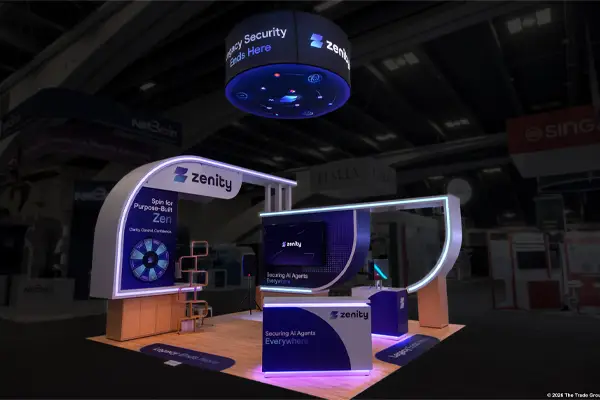
This is why we use aluminum frames with LED lights attached and hang them above the booth, sometimes as high as 16 feet off the ground.
By doing this, we’re creating a volumetric box, or outline, that allows guests to understand not only where the booth space ends but also how big the space is.
Whenever you have a big booth space, you must make sure that you're defining it and—apologies for the cliché—shining a light on it.
Noel: When we get to the venue to do the setup the night before and hit the light switch, that’s when we see the fruits of our labor.
We’ve got the tone transitions and ambient effects. The client’s booth highlights all of the key areas they want to highlight and it has an obvious direction.
This is why definition is so important. You can’t do justice to the nuances of your offering without it.
(DO) Show your business in a whole new light with The Trade Group
We’ve helped businesses like yours stand out, attract high-quality leads, and make more money at trade shows since 1986.
Trade show booth lighting is our bread and butter, and we’ll work with you to:
- Define your strong points.
- Address your weak points.
- Formulate a tasteful, cohesive, impactful solution.
To find out more or talk to us about your next show, contact us here or give us a call at (800) 343-2005.