Given the big names in attendance, the deals that get done on the show floor, and the revenue-generating opportunities for your business, you cannot afford to blend into the background when you attend an aviation trade show.
And let’s not get into the density of competition, or the aerospace industry’s notoriously complex procurement cycle.
This is why you need to instantly capture your ideal customer’s attention and let them know, in no uncertain terms, why they need YOUR product vs. what your competitor has to offer.
If you have ever invested a significant amount of money in a trade show booth that you felt didn’t do this and came away feeling shortchanged, this article is for you.
We explain the key challenges aviation exhibitors face, what they need from their booth, and why partnering with an experienced exhibit provider is critical to success.
The unique challenges of exhibiting at an aviation trade show
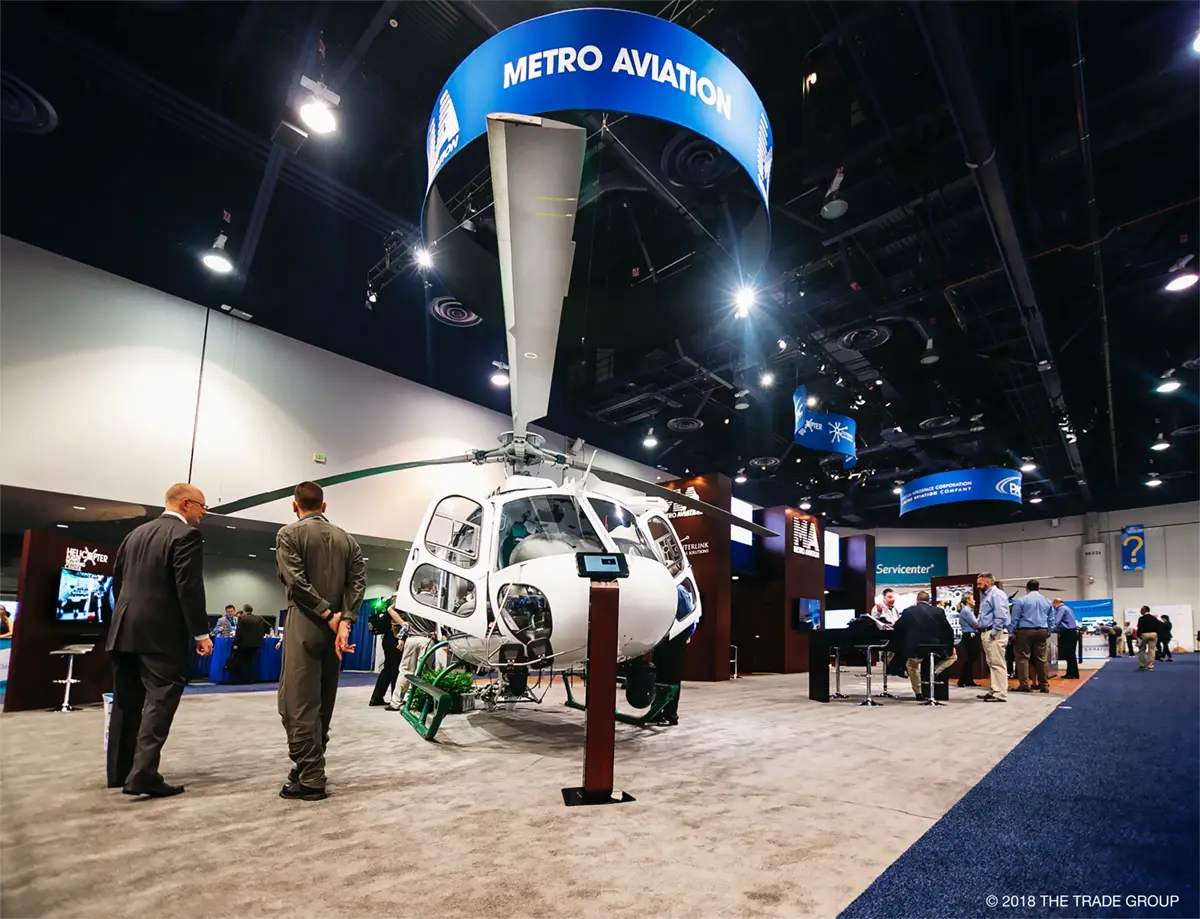
When you’re sharing the floor with operators, OEMs, suppliers, government officials, and so forth, then this point should be pretty obvious to you, but specificity matters.
(It always matters, by the way, but especially so in your industry given the fierce competition for attention.)
Whether you specialize in aircraft components, avionics, or full-flight simulators, you face the same two principal challenges as any other exhibitor:
1. Providing crucial context to people coming in cold.
2. Bringing a highly technical product to life in a visually enticing manner.
Achieving both of these things in a matter of seconds while still appealing to a niche audience is no easy feat. It can only be accomplished by working alongside a trade show partner with a deep understanding of your industry’s challenges and the complexities of what you offer.
Another factor is the scale of competition. You only have to take one look at the VERTICON exhibitor list for this year to know that you’re competing with some major players. Therefore, you have to think smart and be strategic with your booth design if you’re to have any chance of going toe-to-toe with them or beating them to business.
In short, an aviation trade show is not an environment in which a standard booth setup will suffice.
What’s at stake at aviation trade shows
We’ve written blog articles about shows such as VERTICON and MRO Americas, and we know from experience that shows like these are gamechangers for aviation exhibitors. Anyone who’s been at these shows will say the same.
Major aviation trade shows such as these are where you gain exclusive intelligence on major market trends and insight on competitor positioning. They also present you with the opportunity to get in front of thousands of qualified buyers who are actively seeking solutions and engage in meaningful conversations.
If we pluck out an example from England, an estimated $51bn worth of deals were done in just one day at the Farnborough International Airshow. Although this event is an aerospace exhibition and air show as opposed to a ‘trade show’ per se, it highlights the sheer scale of commercial opportunities which are available to businesses like yours when they hit the right message with the right people at the right moment.
Again, the difference between exhibitors who simply get in front of their ideal prospect and those who successfully capture attention and communicate their unique value proposition is strategic thinking.
When an exhibit fails to engage visitors or clearly convey its message, those opportunities may quickly pass to a competitor just a few aisles away.
That’s why aviation exhibitors cannot treat their trade show presence as a simple marketing exercise. It must be approached as a strategic business initiative.
Where aviation exhibitors fall short
Despite what’s at stake at aviation trade shows and the niche audience in attendance, many exhibitors make the classic mistake of choosing style over substance when putting together their booth. In an ideal world, your booth should offer the best of both worlds.
But what we see all too often is a booth that looks visually appealing and has all the bells and whistles but lacks the visual cues or clarity of messaging required to cut through the noise and quickly communicate a complex offering.
It tries too hard to cram in everything about that company’s solution, rather than focusing on one or two crucial details that set it apart from the competition and accentuating those details via its booth designs.
Related: 7 Design Mistakes That Are Hurting Your Booth’s Performance
In other cases, exhibitors will have a booth that amplifies their value proposition and captures the initial attention of passersby but doesn’t keep them there very long. It doesn’t include any furniture where attendees can sit down and talk with booth staff. There’s no visual backstop. There’s no gamification to keep people engaged and allow them to learn about your solution in real time.
All of these details matter—you’re not just wanting to stand out, because that’s only half the battle. You need to provide an attendee experience that’s every bit as smooth, streamlined, and memorable, if not more so, than the major players you’re competing with on the show floor.
When exhibitors aren’t ticking all of these boxes, it’s typically due to the absence of a strategic trade show partner. Without expert guidance, even well-intentioned exhibitors can struggle to translate their product and business goals into an effective show floor experience.
And this confusion and lack of clarity can deter potential buyers from engaging with you before they’ve even got a chance to familiarize themselves with your product.
Where a strategic trade show partner makes all the difference
A strategic trade show partner doesn’t simply build a generic booth for you to take to your next show.
They:
- Focus on your specific goals today, not what you’ve done in the past.
- Ask the right questions to understand your story, audience, and business goals.
- Follow a strict, meticulous design process, from exploration and formulation to fabrication and assembly.
- Pay attention to every detail from the specific color tones that most accurately convey your offering to the full range of costs involved in exhibiting at an aviation trade show.
From there, they create immersive environments that communicate your value clearly, attract the right visitors, and support meaningful interactions with decision-makers.
Why The Trade Group is the best choice for aviation trade show exhibitors
We know what it takes to provide a trade show booth that blows your mind and the minds of your ideal customers.
Why?
Because we’ve done it many times before.
Take Aerometals’ Heli-Expo booth as an example.
Aerometals came to us wanting a booth that:
- Had a dark blue, classy look.
- Came with a high-tech vibe.
- Featured plenty of mingling areas (with social distancing taken into consideration as this was during Covid).
- Was a major step forward from the past.
We delivered this and more for them. Their booth featured an eye-popping dark blue 40’x36’ trapezoidal shaped fabric canopy, along with substantial 10”-square beams and four 18’ columns that anchor the space. A large 18’x12’ video wall for product presentations and live streaming took center stage, while interactive TVs on either side of the space brought their products to life virtually.
You can see the booth in all its glory here.
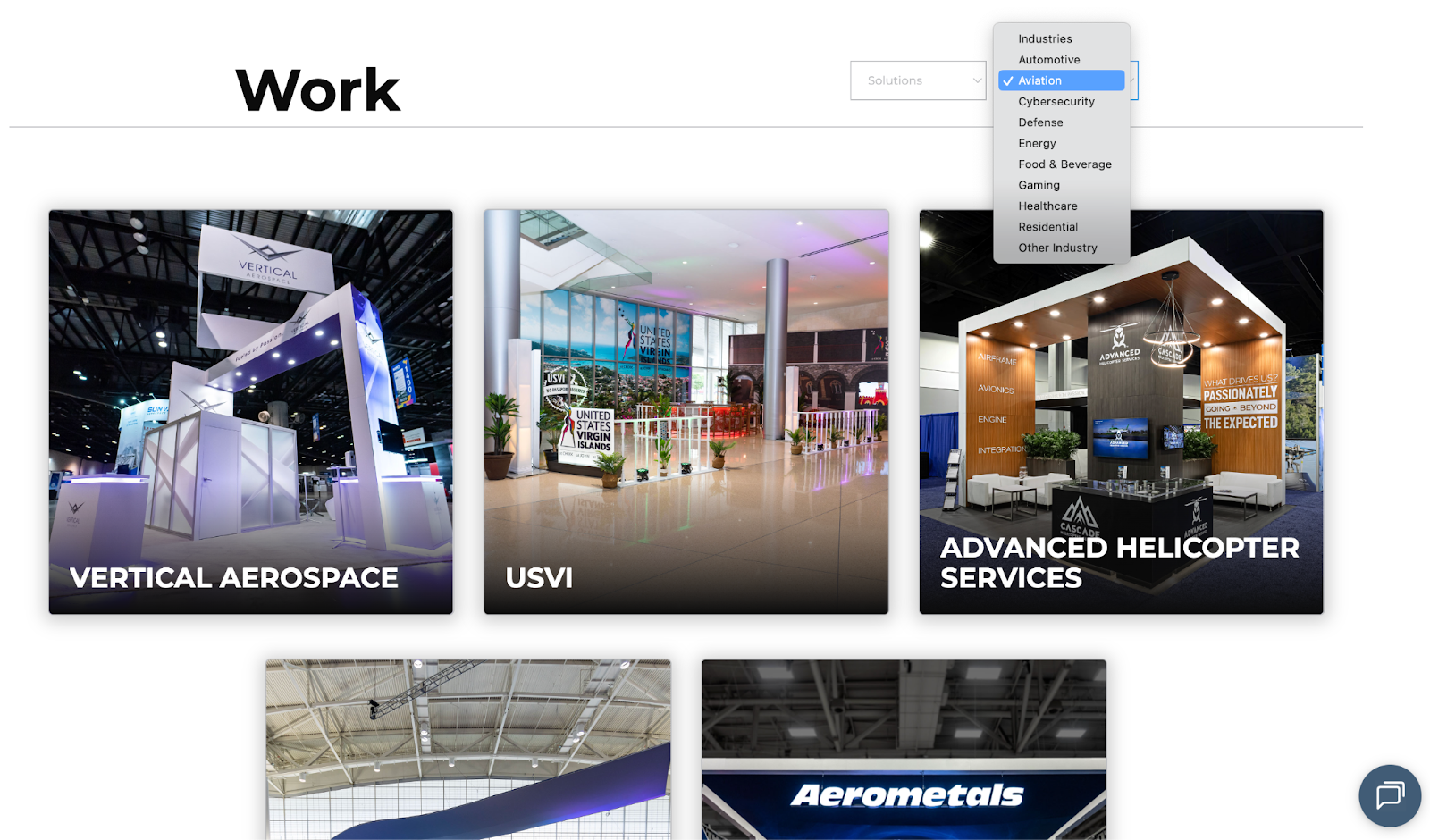
You can also explore our wider aviation portfolio in the 'Our Work' section of our website. Just follow the steps shown in the screengrab below.
Ready for takeoff? Reach out to us today
When you’re ready to get started, we’re ready to take your call.
The Trade Group is a strategic trade show partner that’s helped businesses like yours bring their products and services to life since 1986.
We know that the stakes are high when you attend a trade show, and you can’t afford to spend big bucks just to blend in with the crowd.
That’s why we don’t just create booths—we create immersive, engaging, storytelling assets that bring your business to life.
Call us today at 800-343-2005 to get the ball rolling.