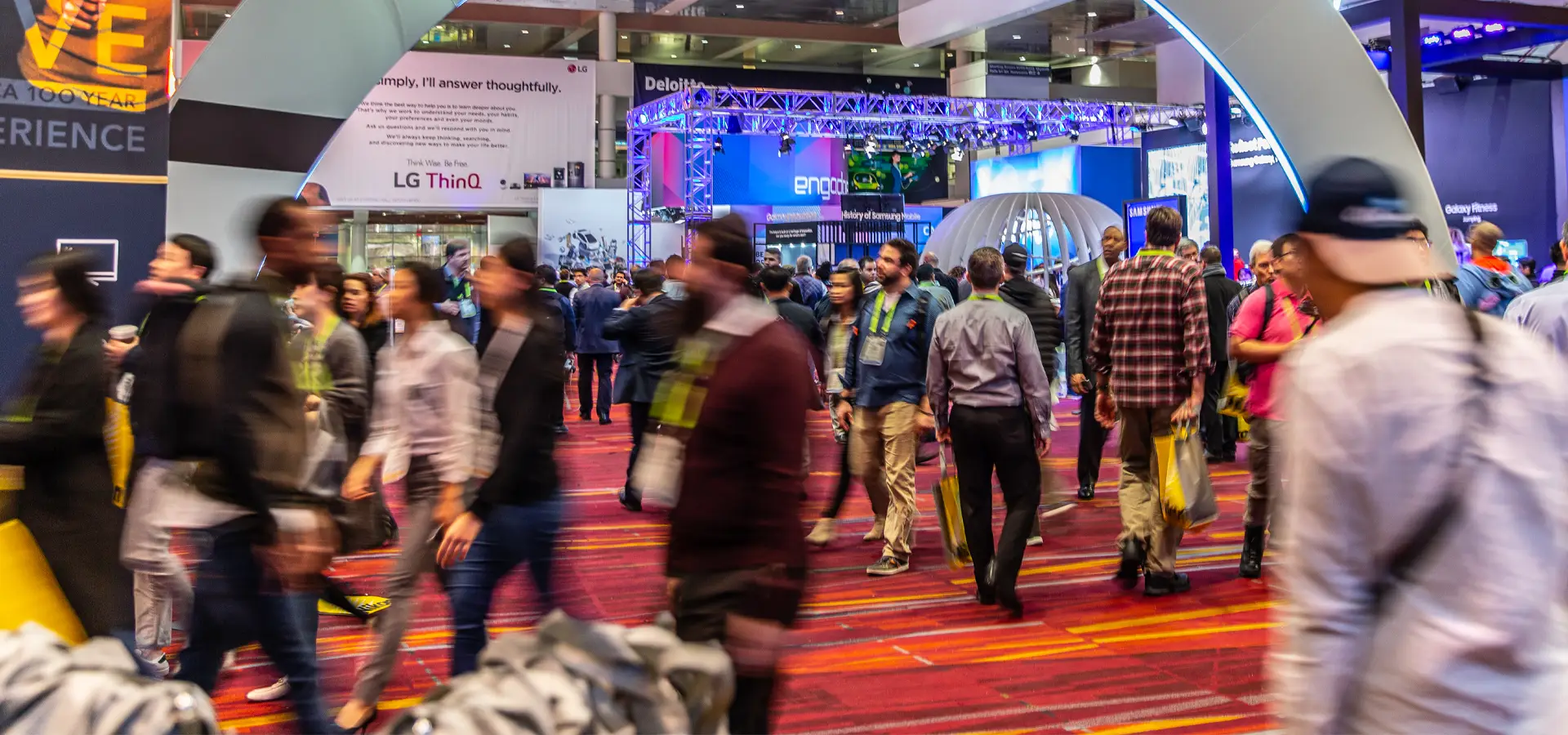
If you’ve attended or exhibited at an event before, you know only too well how expensive it can be.
Once your booth has been designed and shipped and you’ve organized travel and accommodation, your costs stack up fast. They can amount to hundreds of thousands of dollars depending on your situation.
You can’t afford to spend this much just because you have a good feeling about an event or because you’ve attended it before. Many companies have done this without much, if any, evidence that their strategy will work.
Your investment must be backed by a strong reason to believe that you’ll achieve a strong return.
But how can you make sure this is the case?
While no one has a crystal ball and very few things are certain in life, there are a few things you can do—before even deciding whether or not to attend—that will allow you to make the most informed decision.
Our article explains how to figure out which specific events will deliver genuine ROI for your business and which won’t.
Prioritize the events where your ideal customers are most heavily concentrated
This point may seem self-explanatory, but you’d be surprised by how many exhibitors we talk to who haven’t considered it before reaching out to us.
If you’ve earmarked an event but don’t have the data to prove that your ideal buyers will be there, you’re taking a massive punt.
Don’t just look at the overall attendance figures for that event from previous years and assume you’re onto a winner.
Quality beats quantity every time. Talking to one decision-maker who fits your Ideal Customer Profile (ICP) and is ready to buy is infinitely better than talking to 100 tire kickers.
Nearly two-thirds (64%) of exhibitors say the quality of attendees is the single most important factor they take into consideration when deciding to participate in a show. However, a significant proportion leave the show floor feeling that they didn’t speak to the right person.
Don’t let this be you.
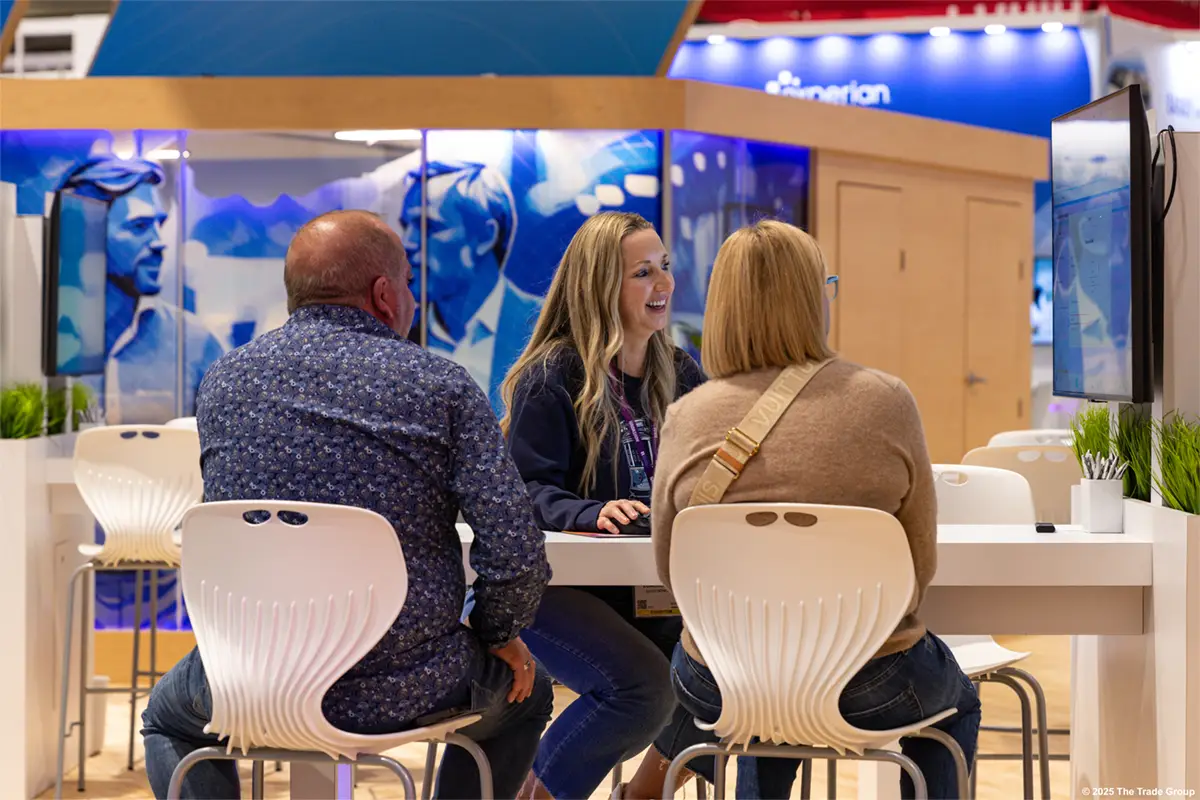
Get a full exhibitor and attendee prospectus and study it in detail before deciding whether or not to attend. More than three-quarters of trade show attendees know which exhibitors they want to meet in advance, and you need to have the same clear picture in your mind as an exhibitor.
Something as simple as typing ‘[INSERT EVENT NAME] attendee / exhibitor list’ in on Google will bring up the relevant result. If it’s not readily available, call the organizers directly and get hold of the list.
We can’t stress how important it is to have this information to hand and cross-check it against ICP density. (You may even want to score it out of 10 based on how likely you feel you are to secure pre-booked meetings with your ideal buyers.)
Otherwise, you could be spending hundreds of thousands of dollars just to talk to unqualified leads.
Define the metrics that signal success
Again, this tip may seem obvious to the more seasoned trade show or event attendees among you, but this is where many companies fall down.
If you don’t know what success looks like going into an event or trade show, you’re probably not going to know what failure looks like, either. That is, until it’s too late.
It’s like turning up to a car showroom, not knowing what you want, picking the first car you see, and hoping it works. Then it breaks down on the way home.
To avoid nasty surprises and give yourself the best chance of success, you need to set specific, measurable goals.
For example, you don’t want your goal to be ‘Generate leads.' Instead, you want it to be 'Book a minimum of 12 meetings with marketing VPs / marketing directors / head of sales' or ‘Confirm meetings with decision-makers from these companies’ and then list them.
Another metric people use to define success is ‘brand awareness.' But your goal shouldn’t just be to elevate your brand awareness. It should be ‘Increase our social media engagement rates by X% on [specific social media channel] across the three days,' or ‘Generate a minimum of 5 follow-up conversations with qualified leads we meet at the show on [channel].'
Maybe it’s something else, like the number of speaker opportunities.
Whatever success means to you, be specific because specificity makes all the difference. It shapes everything from booth design to staff briefing to post-show follow-up. The more specific your goal and the more you hone in on that goal when devising your event strategy, the more likely you are to achieve it.
These are just a couple of examples of metrics you can use to measure the success of your next event. Check out our explainer video below for more useful tips.
https://www.youtube.com/watch?v=ELw3QD41QCo
Decide based on tangible pipeline data, not just gut feeling
History can’t always predict the future, but it’s a pretty reliable precursor in the trade show and events space.
It’s easy to look back on certain events with rose-tinted glasses because you had some nice conversations with people.
But the bottom line is, if those conversations didn’t boost your pipeline or bottom line, you have to strongly consider whether you’d attend again.
It’s like that classic quote from U.S. department store merchant John Wanamaker: “Half the money I spend on advertising is wasted; the trouble is I don't know which half." You may not know off the top of your head which events generated a strong net profit and which didn’t. If you don’t, you need to address this fast.
We often talk to companies who say they want to be at a particular event because their competitors are there and they don’t want to miss out on what they see as valuable business opportunities.
But dig beneath the surface and you may find that such opportunities don’t really exist, and your competitors are simply wasting money whereas you’re putting your money to better use.
Instead of relying on your gut feel, you need to consider the following when measuring the success of your last event:
- Total cost of participation (booth space, design, shipping, travel and accommodation, staffing, and materials) divided by your realistic lead target.
- Cost per qualified meeting.
- Cost per lead.
- Pipeline generated within 90 days.
There are even more metrics than this that you can assess (and that we can advise you on if needed), but you get the idea.
How you feel about an event matters, but hard numbers matter much more.
Think beyond the show floor
Impactful conversations don’t just happen in a trade show booth or event hall.
They happen in the private conference rooms, away from the hustle and bustle. They happen during a panel. They happen over lunch or during the evening dinner over a bottle of wine. They happen during a group walk to a nearby tavern.
That’s why you need to look at an event from the perspective of someone on the balcony, not the dancefloor.
Consider the bigger picture—what are the onsite facilities and hotel like? What amenities are there? Are you within walking distance of cafes, bars, and restaurants where you can get to know someone?
These details often get overlooked, but they matter a lot. Not being confined to a crowded show floor and being able to converse with your leads in a more relaxed setting could open a lot of doors (pun intended).
After all, anyone with a background in sales knows a person is more likely to buy when they feel relaxed and when their guard is down. Sometimes, a quiet drink away from the show venue is just the ticket. That’s where you can connect the dots and get major deals over the line.

Claire Amberson Phillips, our Senior Account Executive, knows this better than anyone.
Here’s what she had to say: “I’ve met decision-makers by sharing cabs or on the monorail. Just recently, my colleagues and I met a huge decision-maker from a major firm at a blackjack table and got talking to them about trade shows, which was wild.
“You just never know when or where you’ll meet someone whom you end up doing business with. That’s why it’s important to take a holistic view of events, as the true ROI often comes from these small moments away from the show floor or event hall.
“The whole point of trade shows is to meet people in person and get to know them, whatever that looks like to you. We work with people we like and whose company we enjoy.
“People don't want to be pitched to all the time, and certain cities have meet-and-greet or hangout spaces where you can unwind, meet with senior stakeholders, and have informal conversations.
“If you don’t meet the Vice President of Sales, you might meet someone in a bar or restaurant who’s willing to pass on your information. Opportunities like this come around when you least expect them.”
How we’ll support you at your next trade show or event
By now, you know how to identify which shows actually move the needle and deliver genuine ROI, not just foot traffic.
Now it’s a case of putting this advice into action, and that’s where we come in.
Whether you want guidance on a specific show or are looking to plan an event, we can help.
The Trade Group specializes in creating immersive, custom trade show exhibits and all aspects of event planning and production.
We’ve helped companies like yours stand out on the trade show floor since 1986. Take Tulip Cooking, creator of the world’s first modular induction stovetop system, which added more than 25 new dealers to its network after partnering with us at the NKBA Kitchen & Bath Industry Show® (KBIS).
https://www.youtube.com/watch?v=Q5pQXBHYE8o
We’ve also majored on event planning and production for over 20 years. French video game publisher Ubisoft Entertainment SA teamed up with us for a launch event, with the livestream for this event reaching over 1 million cumulative views on Twitch and trending globally on social media.
Whichever service you require, you’re working alongside a team of field specialists with a track record of getting results.
If you'd like similar results, contact us here or give us a call at (800) 343-2005.